












Results included through Tuesday, October 20, 2026
Opening night delivered three useful results and roughly 79 games’ worth of reasons not to panic. Oklahoma City handled San Antonio 116-104 in a Western Conference finals rematch, Philadelphia spoiled New York’s banner night with a 106-100 comeback, and Detroit erased a 22-point deficit to beat Boston 121-113. The Thunder, 76ers and Spurs remain locked into the top three; one October game is evidence, not a constitutional amendment.
Because this is the first edition, there are no official risers or fallers. Detroit nevertheless produced the night’s loudest stock-up performance with a 23-0 run and 76 second-half points. Boston supplied the corresponding warning label: Paul George scored 38 in his Celtics debut, yet the defense and Jayson Tatum’s 6-for-23 shooting turned a comfortable lead into confetti for somebody else.
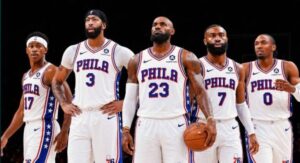
Philadelphia looked far more coherent than a newly assembled superteam has any right to look. Tyrese Maxey scored 28, Jaylen Brown filled the box score, and the Sixers closed the third quarter on an 11-0 run. New York’s loss was not catastrophic, but a ring ceremony followed by a six-point defeat is a fairly efficient way to make the afterparty awkward.
The next wave of games offers immediate stress tests: Minnesota opens at Giannis Antetokounmpo’s new-look Miami, Denver visits Oklahoma City, Cleveland gets Philadelphia, and Boston hosts the champion Knicks with both teams already carrying a bruise. Week 1 has barely started, but the schedule has kindly declined to ease anyone into it.
1. Oklahoma City Thunder
Oklahoma City earned the first win in the rematch that mattered least, but it was convincing all the same. Shai Gilgeous-Alexander scored 32 points with six rebounds, three steals and three blocks in the 116-104 win at San Antonio. Chet Holmgren returned from a preseason quad issue with 14 points and four blocks, while Jared McCain detonated for 20 off the bench and hit six of eight 3-pointers. The Thunder led by 21 at halftime and never trailed.
Denver visits Thursday before the Clippers arrive Sunday, beginning a home stretch against teams with real offensive talent. The Nuggets have lost five straight in Oklahoma City, but Nikola Jokić remains a highly inconvenient way to test whether one excellent opener has become a habit. The Thunder are No. 1; naturally, their reward is more homework.
2. Philadelphia 76ers
Philadelphia’s expensive new puzzle fit together quickly enough to beat the defending champions 106-100 at Madison Square Garden. Maxey led with 28 points, Brown added 19 points, eight rebounds and six assists, and LeBron James posted 14, nine and seven. Joel Embiid had 13 points, 11 rebounds, six assists and three blocks. The Sixers held New York to 18 third-quarter points and committed only 10 turnovers, a polished finish after a shaky first half.
Cleveland comes to Philadelphia on Thursday, followed by a weekend back-to-back against Milwaukee and Detroit. That sequence will test Nick Nurse’s rotation management as much as the roster’s star power, especially with James and Embiid unlikely to be treated like 22-year-olds in a pickup run. The talent is absurd; the maintenance schedule may require its own coaching staff.
3. San Antonio Spurs
San Antonio stays third despite the 116-104 loss to Oklahoma City, exactly where it was locked before opening night. The Spurs were buried by a 31-16 second quarter, but Stephon Castle scored 24, Dylan Harper supplied 18 points, seven rebounds and five assists, and Victor Wembanyama still controlled the paint defensively with 13 rebounds and six blocks. Wembanyama’s 12 points and 0-for-4 night from deep were the real issue, not a sudden collapse of the larger case.
Houston visits Friday before the Spurs go to Dallas on Sunday, giving the young backcourt an immediate chance to clean up its spacing and decision-making. The Rockets’ offensive rebounding and San Antonio’s three-guard lineup make that matchup especially revealing. One loss is survivable. Another 16-point quarter would be less charming.
4. New York Knicks
The champions opened their defense by losing 106-100 to Philadelphia after leading by 10 in the first half. Jalen Brunson scored 21, Karl-Anthony Towns had 19 points and 12 rebounds, and Andre Drummond added 12 and 14 off the bench. The problem was creation: New York managed only 21 assists, Mikal Bridges and OG Anunoby combined to shoot 6-for-24, and Philadelphia’s third-quarter run took the air out of the ceremony.
Friday’s trip to Boston is the proper response game, followed by Orlando at home. The Celtics will be angry after wasting a 22-point lead, while New York needs its starting wings to produce something more substantial than cardio and expensive defense. The banner is permanent. The glow, apparently, has a one-quarter warranty.
5. Houston Rockets
Houston has not played yet, so this placement rests on last season’s point differential and a roster built to correct its half-court flaws. Fred VanVleet is back after missing last season, Marcus Smart adds another organizer, and Kevin Durant, Alperen Şengün and Amen Thompson remain a brutal blend of size and creation. The preseason offered an encouraging detail: Houston played faster and protected the ball better, two concepts it previously treated as optional accessories.
The Rockets open against Dallas before visiting San Antonio and Atlanta. Friday’s Spurs game is the true measuring stick after Houston allowed 145 points on 102 possessions in its last trip there. If VanVleet can organize the late-game offense and the bigs can survive Wembanyama, the Western hierarchy gets crowded quickly. No pressure, just geometry against a skyscraper.
6. Boston Celtics
Boston’s 121-113 loss in Detroit was more troubling in shape than in isolation. George was sensational with 38 points, seven 3-pointers and five steals, but Tatum scored 13 on 6-for-23 shooting and missed all seven of his threes. The Celtics led 72-50 early in the third quarter, then conceded a 23-0 run and 76 second-half points. A veteran contender can lose an opener. It should not misplace an entire defense after halftime.
The Knicks visit Friday, giving Boston a clean opportunity to show that the collapse was a one-day malfunction. Mitchell Robinson’s interior presence and Derrick White’s perimeter shooting will matter against New York’s size, but the larger demand is sustained effort. Paul George already did enough to win his debut; the rest of the Celtics apparently thought attendance was sufficient.
7. Minnesota Timberwolves
Minnesota enters the top eight on the strength of its Anthony Edwards ceiling and the upside of pairing him with LaMelo Ball. The Wolves sacrificed frontcourt depth by moving Julius Randle and Naz Reid, so the bet is clear: Ball’s passing must make Edwards and Jaden McDaniels more efficient without wrecking a defense that has finished in the top 10 four straight seasons. McDaniels’ 10-for-14 preseason shooting from three was an encouraging, probably unsustainable bonus.
The experiment begins Wednesday in Miami against Giannis, then moves to Orlando before Toronto visits. Those are three large, physical defenses eager to test Ball in actions and punish Minnesota’s thinner frontcourt. It is a difficult debut for a remodeled contender, which is useful: weak theories deserve early exposure to strong opponents.
8. Cleveland Cavaliers
Cleveland has enough high-end talent to challenge the East, but its offseason made the equation more delicate. James Harden gets a full season beside Donovan Mitchell, Evan Mobley and Jarrett Allen, while Peyton Watson supplies needed size on the wing. The concern is familiar: the offense can become a sequence of alternating guard isolations, and the preseason unit assisted on fewer than half its baskets when the starters shared the floor.
The Cavaliers open Thursday in Philadelphia, then host Brooklyn. The Sixers game will test whether Cleveland’s new staggering pattern—Harden with Mobley, Mitchell with Allen—creates cleaner offense without surrendering transition chances. Four stars are helpful. Four people waiting politely for their turn is less of a system.
9. Detroit Pistons
Detroit gets the strongest subtle adjustment after turning a 22-point deficit into a 121-113 win over Boston. Cade Cunningham and Jalen Duren scored 22 each, Duncan Robinson added 21 with five threes, and Javonte Green erupted for 19 points after not playing in the first half. The Pistons won the second half 76-55 and finished with 49 rebounds. That is a serious response from a team coming off a 60-win season, even if the first 28 minutes were deeply unserious.
The road now gets unpleasant: Miami on Friday and Philadelphia on Sunday. Detroit went 18-7 last season in games between Eastern playoff teams, but Giannis and the Sixers’ new supergroup present a far harsher test than Boston’s second-half sleepwalk. The Pistons have announced themselves. Next comes the inconvenient business of repeating the announcement.
10. Toronto Raptors
Toronto was already trending upward before bringing Kawhi Leonard back, and his half-court shot creation addresses the roster’s clearest weakness. Scottie Barnes remains the connective star, Jakob Poeltl anchors the starting group, and Ja’Kobe Walter’s catch-and-shoot ability should matter around Leonard’s methodical offense. Toronto posted a positive preseason net rating, but the real variable is availability; Kawhi remains a premium product sold with complicated operating instructions.
The Raptors open against Chicago, visit Washington, then face Minnesota. The Wolves game is the best early test of Toronto’s ceiling, particularly whether Leonard and Barnes can punish Minnesota’s smaller creators without letting Edwards loose in transition. If Kawhi plays all three, Toronto will have cleared its first surprise of the year before Halloween.
11. Denver Nuggets
Any team with Nikola Jokić starts with a functional offense and a plausible route to contention. Denver also gets a healthier Aaron Gordon, who shot 63% in the preseason, but the exits of Peyton Watson and Tim Hardaway Jr. further thin a bench that has repeatedly endangered excellent Jokić minutes. DeMar DeRozan can stabilize non-Jokić possessions; he cannot personally manufacture rim protection, spacing and youth in one shift.
Denver opens Thursday at Oklahoma City before hosting New Orleans. The Thunder matchup will immediately expose the reserve groups and challenge Jamal Murray to handle elite point-of-attack pressure. Denver has lost five straight in Oklahoma City, so this is less a soft launch than an inspection under fluorescent lighting.
12. Miami Heat
Giannis Antetokounmpo changes Miami’s floor, ceiling and probably several local building codes. His transition force beside Bam Adebayo should restore an elite defensive identity and create open threes for Klay Thompson and Andrew Wiggins. The concern is the backcourt and half-court spacing, especially after Adebayo dealt with a groin issue late in the preseason. Miami can overwhelm teams physically; somebody still has to make the shots created by all that collapsing.
Minnesota arrives Wednesday, followed by Detroit and a trip to Charlotte. The Wolves offer the most revealing opener because Edwards and Ball will attack Miami’s perimeter organization while Giannis tests Minnesota’s reshaped front line. Erik Spoelstra has a new toy. Naturally, it is 6-foot-11 and arrives without subtlety.
13. Indiana Pacers
Tyrese Haliburton is back, and that alone should restore the pace and passing that disappeared without him. He looked sharp in the preseason, hitting eight of 15 threes and driving an offense that scored efficiently in his minutes. Ivica Zubac also gives Indiana the rebounding and interior stability it has lacked. The depth behind Haliburton remains thin, particularly with T.J. McConnell unavailable during the preseason.
Indiana opens at New Orleans, hosts Dallas and visits Brooklyn. None is an elite opponent, which removes the convenient excuses if the offense bogs down whenever Haliburton rests. This schedule is a runway. The Pacers should avoid using it as a parking lot.
14. Orlando Magic
Orlando brings back the same core with a new coach and the same central question: can Paolo Banchero and Franz Wagner lead an offense that complements the defense? The Magic moved the ball better in the preseason and Tristan da Silva supplied aggressive perimeter shooting, but Banchero’s isolation possessions still produced too little. Nikola Vučević adds skill and familiarity, though nostalgia has never counted in offensive rating.
Atlanta visits Wednesday before Minnesota comes Friday and Orlando heads to New York. The Magic went 0-4 against the Hawks last season, so the opener is a direct test of whether Sean Sweeney has improved the offensive process without softening the defense. Same players, new voice, very limited patience.
15. Atlanta Hawks
Atlanta’s 20-6 finish after the All-Star break deserves respect, and the offseason added useful depth around a young group. Lu Dort, Dorian Finney-Smith and Aaron Wiggins reinforce the rotation, while Dyson Daniels remains a disruptive defensive engine. The spacing is the unresolved flaw: Daniels shot 2-for-12 from three in the preseason, and pairing him with Dort can invite defenses to place several folding chairs in the paint.
The Hawks start in Orlando, visit Charlotte and then host Houston amid a five-games-in-seven-days stretch. Orlando’s size will immediately challenge Atlanta’s half-court spacing, while Houston will punish tired legs on the glass. This schedule does not offer a warmup; it offers a clipboard and an audit.
16. Los Angeles Lakers
The Lakers now belong completely to Luka Dončić after LeBron’s departure. Walker Kessler should repair a defense that ranked 29th at the rim last season, and Quentin Grimes plus Matisse Thybulle provide badly needed perimeter resistance. The preseason warning was obvious: Dončić carried a 42.3% usage rate and committed nearly twice as many turnovers as assists. Building around Luka is sensible. Asking him to be the building is less so.
Golden State comes to Los Angeles on Wednesday, followed by the Clippers and a trip to Utah. Stephen Curry will test the new drop coverage immediately, while the Clippers can force Luka into repeated defensive work. The roster is better balanced; whether the possessions are balanced is another matter.
17. Phoenix Suns
Phoenix was one of last season’s pleasant surprises, but the follow-up will be harder. Devin Booker remains the organizing star, Jalen Green brings rim pressure, and Miles Bridges adds scoring, yet Mark Williams’ shoulder surgery leaves second-year center Khaman Maluach with meaningful early minutes. The Suns compensated in the preseason by attacking the offensive glass and forcing turnovers. That style is useful, though it tends to collect fouls and bruises as service charges.
Phoenix opens in Portland before hosting Golden State. The Blazers’ Lillard-Morant backcourt will stretch the defense, while their centers will test Maluach’s strength and positioning. Two games against volatile guard play should clarify whether Phoenix’s pressure creates chaos or merely participates in it.
18. Utah Jazz
Utah finally has enough established talent to demand progress. Jaren Jackson Jr., Lauri Markkanen and Keyonte George sit beside young headliners Ace Bailey and rookie Darryn Peterson, but the preseason offense ranked near the bottom in assist rate. Jusuf Nurkić’s toe injury further reduces the passing, and the Jazz have spent three straight seasons last in transition points allowed. Talent is present. Organization has not yet confirmed attendance.
The Jazz open at Memphis, then host New Orleans and the Lakers. Those games offer a fair reading against teams in Utah’s competitive neighborhood, with Friday’s Pelicans matchup beginning a five-game homestand. If the transition defense still looks optional against that schedule, the switch has not been flipped; someone has merely labeled it.
19. Portland Trail Blazers
Damian Lillard and Ja Morant sharing a backcourt is irresistible television and a defensive coordinator’s recurring stress dream. Portland can surround them with Deni Avdija, Scoot Henderson and real rim protection from Donovan Clingan and Robert Williams III. The preseason pairing of Lillard and Morant was outscored in limited minutes, while Lillard-only groups thrived. That is not a verdict, but it is a clue wearing a reflective vest.
Phoenix visits Wednesday before Portland travels to Sacramento. The Suns will pressure the ball and attack the glass, forcing the Blazers’ guards to prove that their offense can outweigh the defensive compromises. The entertainment value is already secure. The standings remain annoyingly results-based.
20. Dallas Mavericks
Cooper Flagg begins Year 2 with Kyrie Irving back and Dusty May installing more movement and more threes. That should raise the offensive ceiling, but Dereck Lively II remains out after foot surgery and Dallas’ preseason defense was poor, especially on the defensive glass. Max Christie and Daniel Gafford carry a heavy burden while the roster waits for its preferred interior structure to return.
Dallas opens at Houston, visits Indiana and hosts San Antonio. That means three very different tests: force on the glass, speed in transition and Wembanyama everywhere. The Mavericks wanted an early diagnostic. The schedule brought the entire medical panel.
21. Washington Wizards
Washington is suddenly fascinating, which is progress before the ball even goes up. Trae Young and Anthony Davis join No. 1 pick AJ Dybantsa and a young core led by Alex Sarr and Kyshawn George. The preseason chemistry was rough: Young shot 7-for-27 and committed 7.5 turnovers per 36 minutes, while the offense cratered in his minutes with Davis. The upside is obvious. So is the installation delay.
Milwaukee and Toronto visit before Washington travels to Chicago for the second night of a back-to-back. That finale matters because the Wizards are 2-42 in such games over the last three seasons, a record normally associated with deliberate sabotage. New personnel, new expectations, same calendar.
22. Charlotte Hornets
Charlotte traded LaMelo Ball after a major offensive leap, handing the next phase to Brandon Miller, Kon Knueppel and a reworked supporting cast featuring Naz Reid. Injuries complicated the preseason: Knueppel missed it with a hamstring issue, Coby White was sidelined by a calf problem, and Moussa Diabaté dealt with an elbow injury. The Hornets then finished last in preseason turnover rate. Reinvention is difficult when half the blueprint is in athletic training.
Charlotte opens at Brooklyn before hosting Atlanta and Miami. The Nets game is the most manageable, but Julius Randle and Michael Porter Jr. will immediately test the Hornets’ frontcourt defense. Protecting the ball would be a lovely first step. Keeping it in the same area code would also qualify.
23. Memphis Grizzlies
Memphis moved on from Morant and now centers its hope on a young frontcourt. Rookie Cameron Boozer drew fouls relentlessly in the preseason, while Zach Edey’s rim protection changed possessions whenever his fragile health allowed him onto the floor. Ty Jerome and Cedric Coward give the offense functional creators, but the roster’s ceiling depends on Edey playing enough minutes to matter without immediately returning to the injury report.
Utah visits Wednesday before road games at Golden State and Sacramento. The schedule is forgiving, and the Boozer-Draymond Green matchup should provide an early lesson in NBA problem-solving and professional irritation. Rookie orientation rarely comes with this much commentary.
24. Golden State Warriors
Golden State’s 4-2 preseason record and strong defense offer a little hope, but the short-term injury picture is bleak. Jimmy Butler, Moses Moody and Kristaps Porziņģis begin the season unavailable, and Stephen Curry turned an ankle during an open practice after the team went 13-26 without him last season. Rookie Yaxel Lendeborg looked ready to contribute, but a contender should prefer its emergency optimism to be older than 23.
The Warriors open at the Lakers, host Memphis and visit Phoenix, with the last two forming a back-to-back. Curry’s mobility and availability will decide whether that is a competitive trip or an extended demonstration of roster dependency. Golden State still has a system. It currently needs more healthy people to inhabit it.
25. LA Clippers
The Clippers enter without Brandon Ingram, Max Strus, Jordan Miller and Yanic Konan Niederhäuser, leaving Darius Garland to organize a lineup held together with veterans and optimism. Rui Hachimura shot eight of 13 from three in the preseason, but the team was badly outscored in the restricted area and struggled on both backboards. The 15-year streak of winning seasons has rarely looked more vulnerable.
Sacramento visits Wednesday before the Clippers face the Lakers and Thunder on the road. The Kings game is the obvious opportunity; Oklahoma City, where the Clippers have lost 15 of their last 16, is the obvious warning. Every schedule contains balance if one is willing to define the word creatively.
26. New Orleans Pelicans
New Orleans mostly ran back a 26-win roster, adding Bennedict Mathurin and hoping internal improvement does the heavy lifting. Zion Williamson remains the pressure point, Jeremiah Fears and Derik Queen are promising, and the preseason defense held up. The offense still needs actual shot-making after finishing near the bottom in paint, midrange and 3-point efficiency last season. Generating the right shots is useful only until somebody has to make them.
Indiana visits before trips to Utah and Denver. Those defenses are not invulnerable, so this is a fair opening test for an offense that should have opportunities. If the Pelicans cannot score efficiently in this stretch, the problem is not the exam.
27. Chicago Bulls
No. 4 pick Caleb Wilson gives Chicago a genuine source of excitement, and new coach Tiago Splitter inherits a young, athletic group that should run. Josh Giddey can organize it, Matas Buzelis can finish, and Nic Claxton should raise the defensive floor. The spacing remains suspect, especially if Buzelis continues passing up open threes and the frontline crowds Giddey’s driving lanes.
Chicago opens in Toronto, visits Milwaukee and hosts Washington. The Raptors will put Barnes on Wilson and challenge every young decision-maker, while the next two games are early markers in the lower half of the East. Development is the priority. Competence would be a tasteful companion.
28. Brooklyn Nets
Brooklyn should be better after adding Julius Randle to a group that desperately needed competent offense. Michael Porter Jr. shot efficiently in the preseason, rookie Mikel Brown Jr. returned from an ankle injury, and Nolan Traore showed more downhill force. The Nets still own one of the league’s youngest cores and a low floor, but there are now enough adults to prevent every possession from becoming independent study.
Charlotte visits before Brooklyn goes to Cleveland and hosts Indiana. The opener is winnable; the next two will test whether the preseason’s league-best offense survives real rotations and scouting. Hope is welcome in Brooklyn. So is a sample size larger than four exhibitions.
29. Milwaukee Bucks
The Giannis era is over, and Milwaukee is rebuilding around the haul from Miami plus its own young pieces. Tyler Herro supplies scoring, Kel’el Ware offers frontcourt upside, and Jaime Jaquez Jr. can stabilize lineups, but the preseason offense ranked near the bottom and the roster still feels halfway between a reset and a clearance sale. Myles Turner and Ware shared the floor effectively enough to keep the experiment interesting.
Milwaukee opens at Washington, hosts Chicago and visits Philadelphia on the second night of a back-to-back. The first two games will reveal whether this group can compete before the schedule becomes cruel. The third will reunite it with Giannis’ old rival conference and several other expensive problems.
30. Sacramento Kings
Sacramento went 0-5 in the preseason with the league’s worst offense, then lost Ben Simmons to an Achilles tear in practice. Rookie Darius Acuff Jr. is now the only nominal point guard, forcing Domantas Sabonis to carry even more playmaking while Zach LaVine occupies an expiring contract. The Kings were outscored by 33 points in 38 preseason minutes with Sabonis and LaVine together. Chemistry would be a generous description.
The Kings open at the Clippers before hosting Portland and Memphis, a relatively soft stretch that offers a chance to avoid immediate burial. Acuff’s decision-making and Sacramento’s defensive rebounding will determine whether those are opportunities or merely scheduled events. Somebody has to be 30th. The Kings arrived early and brought documentation.