



Updated: August 31, 2026. The season recap covers 2025; personnel sections look ahead to 2026. Added Predictions and Projections.
Leadership and Coordinators
- Owner: Michael Bidwill Bidwill oversees a franchise that changed coaches and quarterbacks after a 3–14 collapse.
- Decision Maker: Monti Ossenfort — General Manager Ossenfort controls roster construction and now must show that the young defensive core and aggressive offensive reset can produce wins.
- Head Coach: Mike LaFleur Hired after coordinating the Rams’ league-leading offense, LaFleur brings a movement-heavy system and a mandate to establish a new quarterback plan.
- Offensive Coordinator: Nathaniel Hackett Hackett supplies play-design and quarterback experience, working within LaFleur’s broader offensive structure.
- Defensive Coordinator: Nick Rallis Retained from the previous staff, Rallis provides continuity for a young defense whose 2025 progress was obscured by injuries.
- Special Teams Coordinator: Michael Ghobrial Ghobrial takes over a unit with a reliable specialist base and a need for more return impact.
2025 Season Recap
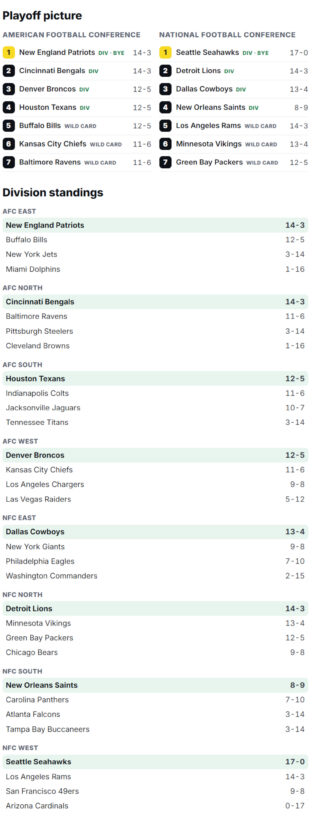
Arizona’s 3–14 finish was the stark outlier in the NFL’s strongest division. While Seattle, Los Angeles and San Francisco combined for 38 wins, the Cardinals went 0–6 against the NFC West, scored 355 points and allowed 488. The result ended Jonathan Gannon’s tenure and pushed the organization toward a quarterback reset.
The offense never found durable footing. Kyler Murray’s play and availability did not provide the consistency required from a veteran franchise quarterback, while offensive-line injuries damaged both protection and the run game. Arizona averaged only 93.1 rushing yards, leaving the offense too dependent on difficult dropback creation. Marvin Harrison Jr. showed high-end ability but finished the year on injured reserve with a heel/foot issue. Trey McBride remained the most reliable creator, using route nuance and yards after catch to function as the passing game’s stabilizer.
James Conner and Trey Benson also battled injuries, eliminating the physical run-game foundation the offense hoped to establish. Without reliable early-down efficiency, Arizona played from behind, exposed its protection and struggled to sustain possessions. The point total was not disastrous in isolation; the inability to pair scores with stops made it inadequate.
Rallis’ defense had credible individual performances. Budda Baker produced another 100-tackle Pro Bowl season, Josh Sweat set career highs with 12 sacks and four forced fumbles, and Calais Campbell remained remarkably productive at 39. Yet injuries shredded the intended rotation. Walter Nolen III, Mack Wilson Sr. and other pieces missed time, forcing the defense to survive without the depth required in a division filled with elite offenses.
Special teams supplied occasional resilience—Chad Ryland scored 111 points and Campbell continued his remarkable blocked-kick production—but those moments could not compensate for deficiencies on offense and defense. Arizona too rarely controlled field position, possession and the line of scrimmage in the same game.
The division context made every weakness more damaging. Arizona faced six games against teams that each won 12 or more contests, and none of those opponents offered a forgiving matchup for an injured offensive line or undermanned defense. The Cardinals were not simply unlucky inside the West; their 0–6 record showed they lacked the depth and quarterback consistency required to survive repeated high-level tests. Their minus-133 point differential therefore reflected both an unforgiving schedule and genuine structural shortcomings.
The win-loss collapse clarified the offseason. Arizona hired LaFleur, retained Rallis, released Murray and signed Gardner Minshew before drafting Carson Beck. The third overall pick went not to a quarterback but to Jeremiyah Love, whom the Cardinals regarded as the best player in the class. That choice signals an offense built to create explosive runs and easier quarterback situations rather than asking one passer to carry the structure.
The rebuild is still incomplete, but it is coherent. Love, Harrison and McBride form a young skill-position core; Chase Bisontis and Isaac Seumalo reinforce the line; and a healthier defense has legitimate playmakers. Arizona is not expected to leap immediately over three championship-caliber rivals. It must first become structurally sound, competitive inside the division and certain that Beck or another future option can solve quarterback for the long term.
2025 Division Standing
- 1. Seattle Seahawks — 14–3 (4–2 division) — Won SB PF: 483 · PA: 292
- 2. Los Angeles Rams — 12–5 (4–2 division) — Lost CC PF: 518 · PA: 346
- 3. San Francisco 49ers — 12–5 (4–2 division) — Lost DR PF: 437 · PA: 371
- 4. Arizona Cardinals — 3–14 (0–6 division) — Missed Playoffs PF: 355 · PA: 488
Arizona finished fourth and was swept in the division. That 0–6 record emphasized the gap between the rebuilding Cardinals and three playoff teams.
Notable 2026 Player Additions
- G Isaac Seumalo (free agency, Pittsburgh Steelers) Seumalo’s experience and steadiness strengthen an interior line central to LaFleur’s run and play-action plan.
- RB Tyler Allgeier (free agency, Atlanta Falcons) Allgeier provides physical complementary work behind Love and insurance for an injury-hit room.
- WR Kendrick Bourne (free agency, New England Patriots) Bourne adds dependable route running and veteran professionalism to a young receiving corps.
- QB Gardner Minshew (free agency, Kansas City Chiefs) Minshew is a credible bridge and competition quarterback while Beck develops.
- S Andrew Wingard (free agency, Jacksonville Jaguars) Wingard adds physicality and special-teams experience.
Notable 2026 Player Losses
- QB Kyler Murray (released) Arizona moved on from its longtime franchise quarterback, absorbing the short-term uncertainty to reset the position and offensive timeline.
- DL Calais Campbell (Baltimore Ravens) Campbell’s production and leadership are difficult to replace even at age 39.
- DL Dalvin Tomlinson (released) His departure removes veteran run-defense mass from the interior rotation.
- S Jalen Thompson (Dallas Cowboys) Thompson’s departure removes an experienced, versatile starter from the back end and changes the safety rotation around Budda Baker.
2026 Draft Class
- Round 1, Pick 3 — RB Jeremiyah Love, Notre Dame Love produced 1,372 rushing yards and 21 total touchdowns in 2025. His explosiveness, receiving ability and modest college workload support immediate featured usage.
- Round 2, Pick 34 — G Chase Bisontis, Texas A&M Bisontis did not allow a sack in his final 18 college games and entered camp competing at right guard, but his August move to injured reserve ended that immediate path.
- Round 3, Pick 65 — QB Carson Beck, Miami Beck brings size, accuracy and major-program experience. He can develop behind Minshew while proving his decision-making holds under pressure.
- Round 4, Pick 104 — DL Kaleb Proctor, Southeastern Louisiana Proctor offers developmental power and length, but a torn meniscus is expected to keep him out for most or all of his rookie season.
- Round 5, Pick 143 — WR Reggie Virgil, Texas Tech Virgil’s speed gives the offense a vertical developmental option and special-teams candidate.
- Round 6, Pick 183 — LB Karson Sharar, Iowa Sharar projects through tackling reliability and coverage-unit value.
- Round 7, Pick 217 — OT Jayden Williams, Mississippi Williams is a developmental depth blocker whose size gives him guard-tackle flexibility.
2026 Spotlight Watch
- Hot Seat — Monti Ossenfort After choosing a new coach and resetting the quarterback room, Ossenfort needs visible evidence that the roster has a sustainable direction.
- Breakout Watch — Walter Nolen III Health could unlock the interior penetration that made Nolen a first-round pick and give Rallis a needed disruptive centerpiece.
- Bust Watch — Marvin Harrison Jr. Harrison’s talent remains clear, but injuries and uneven availability have prevented him from becoming the weekly lead receiver Arizona expected. Continuing foot issues make health and consistent separation the defining tests of his third season.
- Team Superstar — Trey McBride McBride is the offense’s most dependable mismatch and a premier all-level receiving tight end.
Prediction
Arizona will finish with the worst record in the league at 0-17. They will make history and be rewarded with the number one pick in the draft.
Below is the complete 2026 regular season projections.